Uncovering the Inca Empire: History, Culture and Influences
Even after so much time, the Inca empire still surprises with everything it built.
Advertisements
The Inca Empire was one of the most fascinating civilizations in the history of South America. With a unique culture, it dominated vast regions of the Andes, leaving a legacy that still arouses curiosity today. Through its innovations in architecture, engineering and administration, the Empire achieved an impressive organization.
In fact, the way the Incas dealt with natural resources and their agricultural practices are still studied by experts. Although the Inca Empire disappeared centuries ago, its impact remains alive, whether in the ruins or in the traditions that still influence the region.
Origin and expansion of the Inca Empire
The Inca Empire began in the 15th century with its founder Manco Cápac, who united several tribes in the Andes. From then on, the empire grew in surprising ways. It came to dominate what is now Peru and expanded to areas such as Bolivia, Chile, Argentina and even Ecuador.
In fact, expansion was accelerated through a combination of military force and diplomatic strategies. In other words, the Incas conquered territories and, at the same time, offered advantages such as infrastructure and political stability to the people who joined the empire.
Inca society
Inca society was well organized and structured, with a clear hierarchy. At the top was the 'Sapa Inca', considered a son of the sun, who held absolute power. Below him were the 'nobles' and the 'viracochas', responsible for the administration and governance of the conquered regions.
The peasants formed the basis of society, taking care of agriculture and working on construction. In this sense, they were divided into groups, with a clear responsibility for each one.
Furthermore, Inca society also valued the exchange of resources and services, which guaranteed the stability of the empire. Thus, the union and cooperation between the different social classes helped to further strengthen the Inca Empire.
The religion of the Incas
The Inca religion was centered on the worship of the Sun, with the god Inti being the main figure. He was even considered the divine ancestor of the Sapa Inca, the emperor, and responsible for the fertility of the land and crops.
Furthermore, belief in other gods such as Pachamama, the goddess of the earth, and Viracocha, the creator of the universe, was also fundamental. In fact, the Incas practiced various religious rituals, such as offerings and sacrifices, to please their gods and ensure good harvests and peace in the empire.
It is also worth mentioning that they also believed in an afterlife, with the dead being buried with valuable objects and food for the spiritual journey. Thus, religion was strongly linked to the politics and social organization of the empire.
Inca architecture
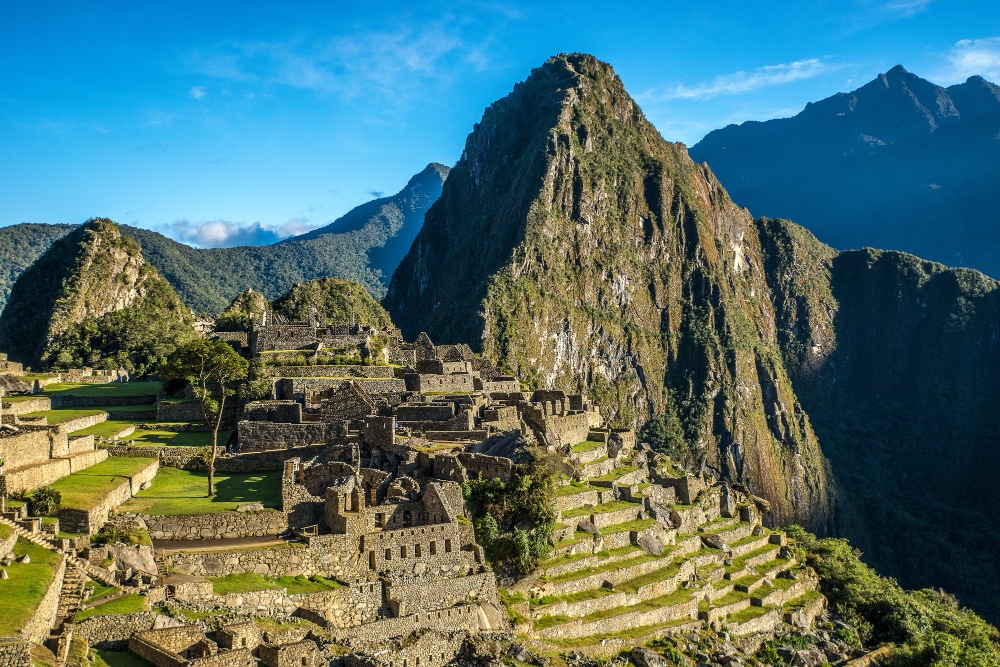
Inca architecture is famous for its incredible ability to adapt to the rugged terrain of the Andes. Thus, they built temples, fortresses and entire cities, such as Machu Picchu, using huge stones that were perfectly fitted together, without the use of mortar.
In addition, the Incas created sophisticated irrigation systems, making the most of natural resources. Their constructions, such as agricultural terraces, were designed to maximize production and protect against landslides.
The Inca communication system
Their communication system was impressive, especially considering the technological limitations of the time. They used quipus, a system of ropes and knots, to record important information, such as censuses and taxes.
Each node represented a specific number or data, facilitating the control and administration of the empire. In addition, the Incas had an extensive network of roads that connected different regions of the empire.
As a result, messengers known as 'chasquis' traveled these trails quickly, exchanging information and ensuring that communication was efficient. This system was vital for managing such a large and diverse empire.
Inca art and culture
Inca art was deeply connected to religion and nature, reflecting the spiritual connection they had with the world around them. Pottery, for example, was not only functional, but also decorated with religious symbols and geometric shapes that represented natural elements.
The fabrics and garments were highly detailed, with patterns that varied according to social class. In other words, nobles wore clothes made from alpaca and vicuña wool, while peasants wore simpler fabrics.
Furthermore, Inca art, whether in paintings, sculptures or metal pieces, always sought to reflect the harmony and order of the empire.
Machu Picchu and other archaeological sites
Machu Picchu is undoubtedly the most famous archaeological site of the Inca Empire. Located in the Andes Mountains, the city was built with impressive precision, without the use of mortar. Each stone was carefully fitted together, which ensured its survival to this day.
In addition to Machu Picchu, other sites such as Sacsayhuamán and Ollantaytambo are also of great historical importance. Sacsayhuamán, for example, is known for its gigantic stone walls that have withstood several earthquakes.
Ollantaytambo served as a religious and military center, and its imposing buildings still stand today. These sites reflect the Inca's ability and organization to overcome natural challenges and build lasting structures.
That’s it! The Inca Empire left an impressive legacy that we can still explore and learn from. Their history, achievements, and culture continue to inspire generations. Now that you’ve made it this far, here are some of the curiosities of the Byzantine Empire. Until later!