Far beyond Greek mythology: discover the most famous mythologies in the world
Originated with the purpose of explaining the origins of the universe, mythical knowledge is filled with gods, heroes and fantastic beings.
Advertisements
Mythologies around the world have deep roots in the ancient civilizations that originated them. Known as sets of beliefs, mythical knowledge seeks to elucidate the origin of the world, the essence of nature and the role of humanity in the cosmos.
Their narratives, full of deities, heroic figures and magical beings, have played a fundamental role in the interpretation of the universe and in the reflection on human existence throughout time. Among the most renowned mythologies in the world, the following stand out:
1. Greek mythology
Greek mythology is one of the oldest and most influential in the world. As the name suggests, it originated in Ancient Greece and has influenced Western culture in many ways, especially through its first cause to explain the origin of life.
Thus, Greek mythology is full of olympic gods known throughout the world, they are: Zeus, the all-powerful lord of thunder; Hera, the queen of the gods; Athena, the goddess of wisdom; and Poseidon, the ruler of the seas.
Heroes such as Hercules, Theseus and Jason, and fantastic creatures such as minotaurs, centaurs and sirens are also part of Greek mystical narratives.
2. Roman Mythology
Roman mythology was influenced by Greek mythology, but with some differences. This is because the Romans modified several narratives and figures from mythology that came from Greece to adapt to their own culture.
Thus, Roman mythology presents the Greek gods with their respective Roman names. Thus, Jupiter, the Roman equivalent of Zeus, heads the Roman pantheon alongside Mars, Juno, Venus and other gods and goddesses.
In addition, it features great heroes such as Romulus and Remus, Aeneas and Tarquinius, and fantastic creatures such as werewolves, fauns and nymphs.
3. Egyptian Mythology
Egyptian mythology is one of the most complex and fascinating in the world. Originating in Ancient Egypt, it influenced Egyptian culture for thousands of years.
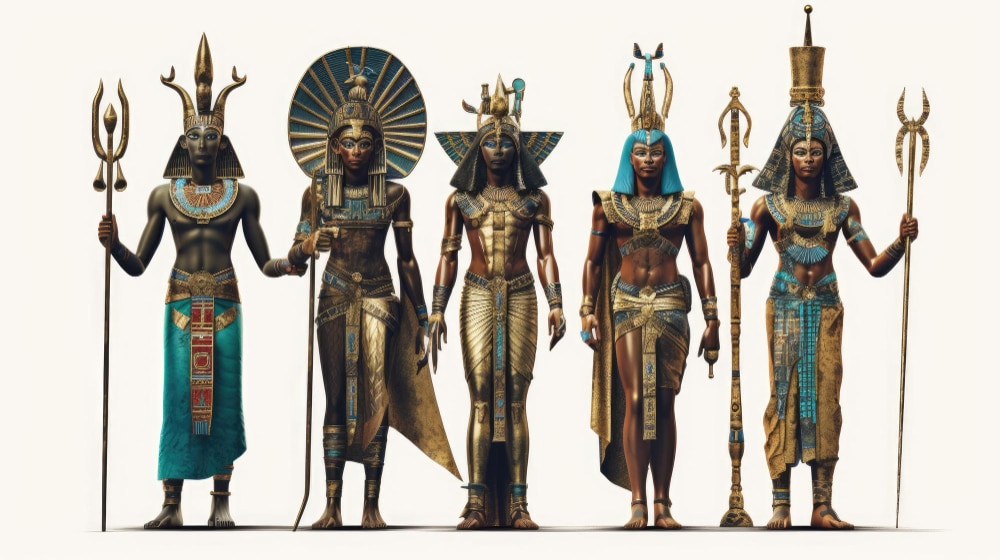
Among the best-known Egyptian gods are Ra, the sun god; Isis, the goddess of fertility; Osiris, the god of the dead; Horus, the god of the sky; and pharaohs such as Tutankhamun and Ramses II. In addition, Egyptian mythology features fantastic creatures such as sphinxes, mummies, and scarabs.
The mythical stories of Egypt offer an interesting insight into Egyptian cosmology and beliefs about the afterlife. In fact, to delve even deeper into this mythology, it's worth reading The ancient Egyptian book of the dead.
4. Norse Mythology
Norse mythology refers to the mythology of the Germanic peoples of northern Europe, originating in Scandinavia. With gods such as Odin, Thor, Loki, Freya, Heimdall and Tyr, this mythology is the basis of a famous Marvel film: Thor: Ragnarok.
As for his fantastic creatures like trolls, Elves, giants and dragons are featured in many film productions. You may have seen these creatures in films such as The Lord of the Rings e The Hobbit an unexpected journey.
Norse legends are marked by epic battles, mysterious prophecies and an inexorable destiny known as Ragnarök, the twilight of the gods.
5. Mayan Mythology
Mayan mythology is the mythology of the Mayan people of Central America, originating in Mesoamerica. Although little known, this mythology is full of stories of creation, human sacrifices and cosmic cycles.
In it, we can find both worshiped and feared gods such as Quetzalcóatl, the serpent god; Huitzilopochtli, the god of war; and Kukulkan, the feathered serpent.
6. Celtic Mythology
Originating in the British Isles and parts of Western Europe, Celtic mythology features a variety of deities, mystical creatures and epic legends.
Gods such as Dagda, god of war and magic; Lugh, god of blacksmiths; and Morrigan, goddess of fury and battle are revered in Celtic mythology. In addition to them, beings such as fairies, elves and druids play important roles in Celtic stories and cosmology.
7. chinese mythology
Ancient China, in turn, is also a bearer of a rich mythological tradition, full of gods, spirits and legendary heroes. Divine beings such as the Jade Emperor, leader of the heavens; Guan Yin, goddess of mercy; Medicine Buddha; and gods of the natural elements are worshipped in Chinese mythology.
Furthermore, narratives of legendary figures such as Sun Wukong (the Monkey King) and Chang'e (the moon goddess) still permeate generations.
8. Australian Aboriginal Mythology
Many people don't know this, but the Aboriginal cultures of Australia have their own mythological traditions, which have been passed down orally for millennia. For example, the ancestral spirits, inhabitants of the so-called 'The Dreaming' or 'The Dreamtime', Dream Time, are fundamental in Aboriginal cosmology.
The concept of the Dreamtime is used to symbolize the aboriginal ideals of Whenever, a period in which the earth was inhabited by ancestors, who possessed heroic proportions or supernatural abilities.
These figures, unlike the gods, did not exercise control over the material world and were not objects of worship, but rather of reverential respect.
Did you enjoy learning about the most famous mythologies in the world? Well, now you know, share them on social media with your friends and stay up to date with our other publications here on the site. How about getting to know the most spoken artificial languages in the world? Until later!