
Historical errors: events that altered the course of humanity.
Historical errors demonstrate how misguided decisions shaped important events and transformed the world.
Advertisements
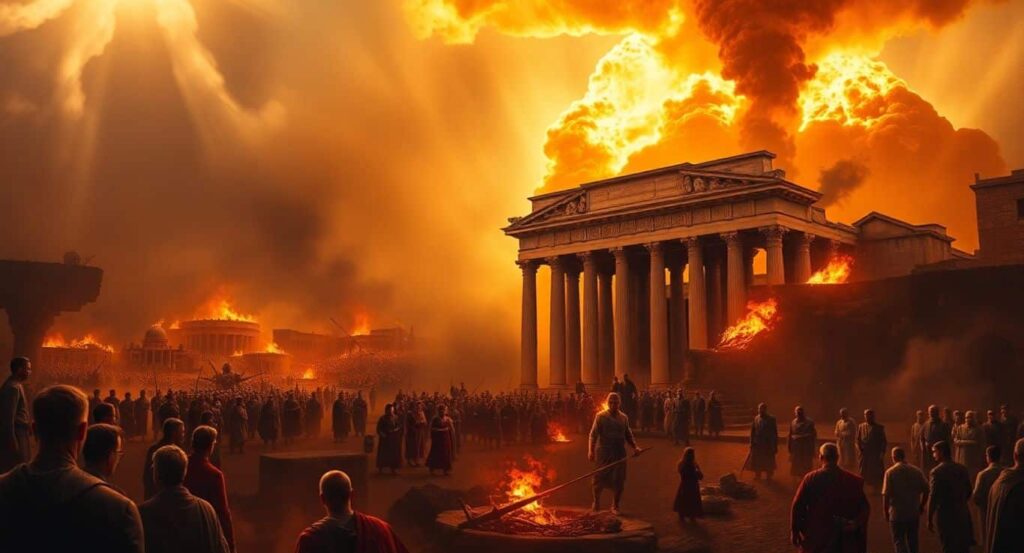
History is full of historical errors that have shaped the world. This is because many misguided decisions, choices, or interpretations have had enormous consequences, affecting societies, economies, and even entire cultures. Understanding these errors helps us reflect on the past and realize how small mistakes can generate large impacts.
Studying historical errors goes beyond simple curiosity: it's an opportunity to learn from others' experiences and avoid repeating harmful patterns. Analyzing these critical moments reveals not only the mistakes made, but also the contexts and circumstances that made them possible, offering valuable lessons for the present and the future. Keep reading to discover historical errors.
1. The Library of Alexandria
The Library of Alexandria was a beacon of knowledge in antiquity, housing an immense amount of wisdom accumulated over time. Furthermore, its central role was to preserve philosophical, scientific, and literary works, bringing together contributions from diverse cultures.
However, the destruction of this collection, whether by a single event or by successive fires, resulted in an irreparable historical loss. This destruction interrupted the flow of knowledge and hindered access to information that could have driven earlier discoveries.
Consequently, the absence of this cultural heritage has left significant gaps in our understanding of the past. Furthermore, it has hindered progress in various areas, highlighting the impact that preserving knowledge would have had on the intellectual evolution of humanity.
2. The Treaty of Versailles
Following World War I, the Treaty of Versailles was signed with the aim of establishing peace in Europe. It imposed harsh conditions on Germany, including economic and territorial restrictions, which aimed to hold the country responsible for the conflict.
However, these punitive measures generated resentment and political instability. Consequently, the weakened social and economic environment created fertile ground for the emergence of extremist movements and radical ideologies.
Furthermore, the impact of the treaty showed how an attempt to consolidate peace can generate opposite consequences. Discontent fueled tensions that, in the medium term, contributed significantly to the beginning of... Second World War.
3. The non-abolition of slavery
Slavery has profoundly marked the history of humanity and persisted in various regions for centuries, even after being recognized as an inhumane practice. Furthermore, its maintenance allowed systems of exploitation to continue operating under economic and political interests.
Furthermore, the delay in abolition contributed to the perpetuation of social and racial inequalities. Entire communities They suffered from a lack of rights.education and opportunities, creating cycles of exclusion that last for generations.
Finally, the consequences of this historical period remain visible to this day, reflecting the depth of its social, economic, and cultural impacts. This legacy demonstrates how decisions centered on profit and power can leave lasting marks on society.
4. The failure to predict the First World War
The beginning of the 20th century was marked by growing tensions between European powers, complex military alliances, and an intense arms race. Exacerbated nationalism and territorial disputes increased the risk of conflict, but leaders underestimated the seriousness of the situation and failed to act preventively.
The failure to anticipate the unfolding of the war and to seek effective diplomatic solutions allowed the First World War to break out. Many believed that... The conflict would be brief and decisive., ignoring the impact of trench warfare, new military technologies, and the mass mobilization of soldiers and resources.
The result was a prolonged cycle of violence that cost millions of lives, destroyed economies, and redrew political borders. This historical episode highlights how poorly planned decisions, coupled with a lack of international cooperation, can transform tensions into global catastrophes, shaping the following century.
5. The 1929 crisis and the inadequate response
The Great Depression, triggered by the New York Stock Exchange crash of 1929, quickly spread throughout the world. generating mass unemploymentWidespread bankruptcies and a collapse of confidence in financial systems. The global economy, interconnected even then, proved extremely vulnerable to shocks, highlighting the fragility of economic structures.
The initial response from many governments, centered on protectionist and austerity policies, ended up worsening the crisis. High tariffs and restrictions on international trade further reduced the circulation of goods and capital, intensifying the recession. The population suffered greatly from resource scarcity and increased urban and rural poverty.
The lack of international coordination and the delay in implementation. innovative economic policies They demonstrated an underestimation of the complexity of the crisis. The experience of the Great Depression served as a warning about the need for more effective intervention instruments and global cooperation, profoundly influencing the formulation of economic policies in the following decades.
6. The Cold War and the Arms Race
After World War II, the world entered a period of intense rivalry between superpowers, known as the Cold War. marked by indirect conflictsespionage and technological competition. One of the most worrying legacies of this period was the nuclear arms race.
Fear and distrust permeated international relations, generating crises that threatened world peace, such as the Cuban Missile Crisis. At the same time, enormous amounts of economic and human resources were directed towards military strengthening, diverting investments that could have been used for education, health, infrastructure, and combating poverty.
This ongoing tension shaped decades of international policies It profoundly influenced civil society, culture, and science, while also highlighting the fragility of human coexistence in the face of military technology. The Cold War reminds us of the historical cost of strategic decisions made without fully considering the humanitarian and global consequences.
By revisiting these historical errors, we realize that the history of humanity is woven not only from great planned achievements, but also from an intricate web of mistakes and chance occurrences. Finally, take the opportunity to understand another significant moment in history, the Tokaimura disaster.