Leonardo Da Vinci: 6 Unusual Facts About His Life
Discover surprising facts about Leonardo Da Vinci, the Renaissance genius who left an unforgettable legacy.
Advertisements
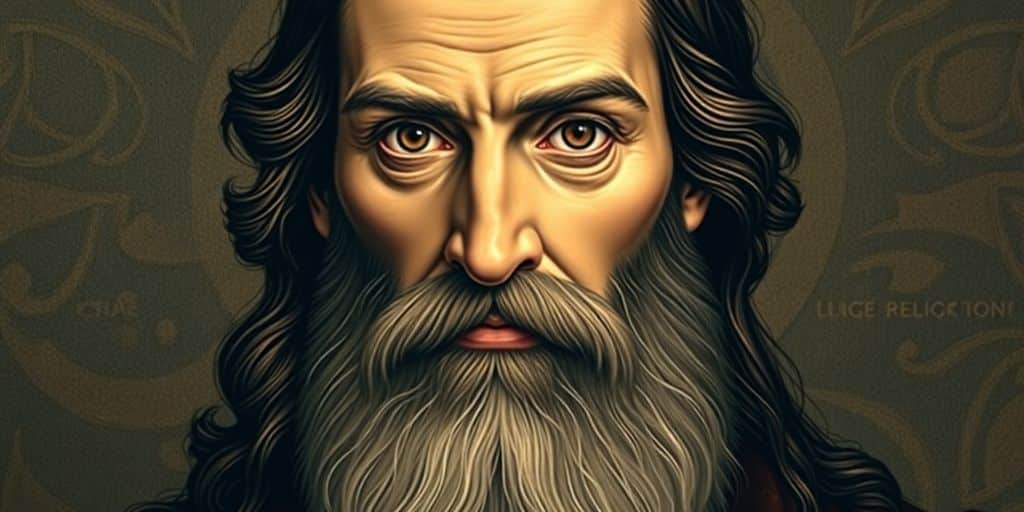
Leonardo da Vinci is recognized as one of history's greatest geniuses, and his life is filled with fascinating facts that go beyond his most famous works of art. He was a painter, inventor, scientist, engineer, and anatomist, leaving a legacy that blends creativity and scientific knowledge.
Therefore, in this article, we'll present six interesting facts about Leonardo Da Vinci that reveal surprising details about his personality, routine, and inventions, demonstrating why he continues to inspire admirers around the world. Read on to find out!
1. His last name was not Da Vinci
Leonardo was born without a surname in the modern sense, the illegitimate son of Piero Fruosino and Caterina, a peasant woman. Therefore, his name did not correspond to the way surnames are used today; in other words, theoretically, his surname was not da Vinci.
His full registered name was "Lionardo di ser Piero da Vinci," indicating his filiation to Piero and his origins in the village of Vinci. Thus, the identification referred directly to his place of birth and not to blood ties, as is common today.
Consequently, associating the name solely with "Da Vinci" constitutes a historical simplification. Furthermore, naming people by their village or father was common in Tuscany at the time, reflecting specific social customs of the time.
2. He hated Michelangelo
Leonardo maintained a rivalry with Michelangelo, considering his muscular figures exaggerated and comparing them to "bags of nuts or bunches of radishes." This perception reflected marked differences in their artistic approaches.
When he participated in the committee responsible for defining the location of the work David, Leonardo questioned the quality of the marble used by Michelangelo. Thus, he expressed technical criticisms that demonstrated his attention to detail.
Therefore, the relationship between the two artists was marked by competition and aesthetic disagreements. Furthermore, their opinions on works and materials revealed differences in style and criteria of artistic excellence. The rivalry with Michelangelo followed until the end of his life.
3. He was an engineer
Despite being the best known of those born in Florence, Leonardo spent a significant part of his career in Milan. There, he applied his drawing and measuring skills to military engineering and geography. He worked as an engineer for a time.
The work took place under the supervision of Ludovico Sforza, who was Duke of Milan, involving strategic planning and studies of the territory. In this way, it contributed directly to projects that required technical precision.
Thus, Leonardo's work as an engineer and geographer demonstrated his interdisciplinary knowledge. Furthermore, these activities demonstrated the versatility of his training, combining art and science in a practical way.
4. I wrote backwards
Leonardo wrote many of his texts using so-called “mirror writing,” writing backwards. This method aroused curiosity among historians of art for years, provoking analysis of their intentions in doing so.
Some studies suggest that the technique was related to the author's left-handedness, preventing the ink from smudging while writing. Thus, the practice could have had a purely practical purpose.
Furthermore, mirror writing may also have served to protect ideas from unauthorized readers. Thus, the combination of technical and confidentiality reasons highlights the complexity of its unconventional registration methods.
5. Lived in the Vatican
In the last years of his life, Leonardo resided in the Cortile del Belvedere, in Vatican City, next to Rafael and his old rival Michelangelo. This period marked his coexistence with other great artists of the time who also lived in the region.
He received an allowance and had the freedom to pursue his studies, which allowed him to continue research and experiments without the need for formal employment. However, he encountered limitations when trying to gain recognition before papal authority.
Consequently, the experience revealed frustrations related to official recognition, despite favorable residency and funding conditions. Furthermore, it highlighted the tensions between artistic prestige and institutional expectations.
6. He was buried at the Château d'Amboise
In 1516, Leonardo began work commissioned by Francis I of France, receiving special attention from the king. He participated directly in the planning of a new fortified city, applying his engineering and architectural knowledge.
His work at Clos Lucé allowed him to continue research and projects until the end of his life, combining technical innovation with urban planning. Thus, he established a period of great productivity.
Leonardo died in 1519, at the age of 67. Although legendary accounts mention that Francis I displayed intense emotion, the narrative mainly highlights the proximity between the artist and the monarch during his later years.
So, we've reached the end of our content on interesting facts about Leonardo Da Vinci. Did you already know any of them? Which one surprised you the most? And, if you really enjoy learning more about great geniuses, be sure to check out our article that tells more about the story of Nikola Tesla, one of the minds behind electricity.